

How Long Do Conservatories Last (And What Wears Out First)?
- K&S Bespoke Builds

- 5 days ago
- 5 min read
Updated: 2 days ago
You've spotted some yellowing on the roof, the frames are looking tired, and you're wondering whether the conservatory has another decade in it or whether it's coming up to retirement.
The honest answer depends less on the conservatory as a whole and more on which bit gives up first. Here's how long each part actually lasts, what affects the timeline, and when it's worth keeping things going.

How long does a conservatory last?
A well-built UK conservatory typically lasts 20-30 years, with the structure often outliving the roof. The frame and base can last 25+ years with minimal maintenance. The roof is the limiting factor: polycarbonate roofs start failing at around 10-15 years, glass roofs last 20+ years, and modern warm roofs are designed to last 25 years or more.
What part of a conservatory wears out first?
The roof, almost always. We've stood inside hundreds of conservatories across Reading and the rest of Berkshire and the same pattern repeats. The brickwork is fine. The base is fine. The uPVC frame might be tired but it's structurally sound. The roof is the problem.
That's because the roof takes the worst of everything. Sun in summer, frost in winter, rain all year, leaves and debris from above. Polycarbonate yellows and grows algae inside the flutes. Glass seals fail and let condensation in. Roof bars warp. Sealant breaks down. By the time the structure underneath needs serious work, most owners have already replaced the roof at least once.
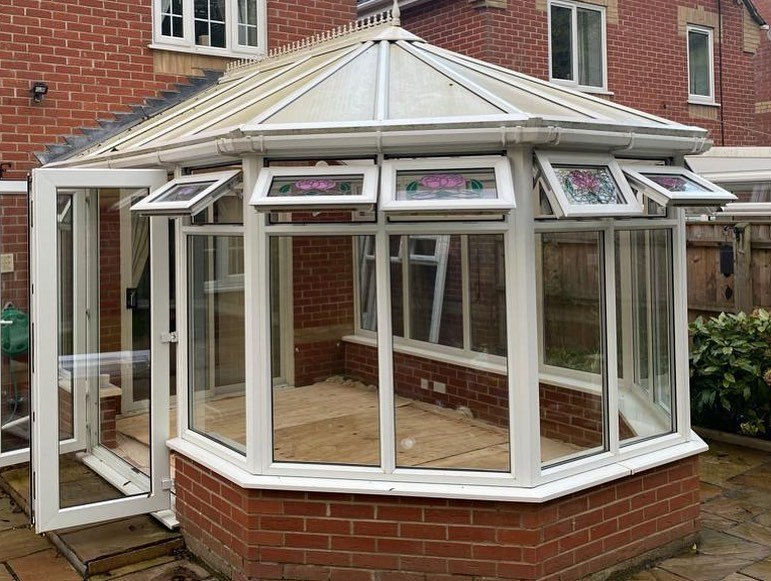
How long do the different parts of a conservatory last?
Rough lifespans, based on what we see day-to-day:
Polycarbonate roof: 10-15 years before it yellows, leaks or grows algae inside the sheets
Single-glazed glass roof: 15-20 years before seal failure starts causing condensation
Modern double-glazed glass roof: 20-25 years with reasonable maintenance
Warm roof system: 25+ years, with most coming with a 25-year guarantee
uPVC frames: 25-30 years before they discolour beyond cleaning
Aluminium frames: 30-40 years with minimal upkeep
Brick dwarf walls and base: 50+ years if built to a proper foundation
Conservatory doors: 20-25 years before locks, hinges or seals need replacing
Sealant and weather strips: 5-10 years before resealing is sensible
Gutters and downpipes: 20-25 years before brittleness or splits appear
The structure usually has plenty of life left when the roof has reached the end of its. That's why a roof replacement is the most common conservatory job we do.
What affects how long a conservatory lasts?
A few things shorten or extend the timeline more than others.
Quality of the original build
A conservatory built on a proper foundation with quality materials and decent fitters can last decades. One built fast and cheap will need work within ten years. The mid-1990s to early-2000s boom produced a lot of the latter, which is why so many UK conservatories are now ready for either a refit or a removal.
Aspect and exposure
South-facing conservatories cook in summer, which is hard on seals and sealant. North-facing ones grow algae faster. Properties near trees collect more debris in gutters and on the roof. Coastal properties get more salt corrosion on metalwork. None of these are dealbreakers, but they all shorten the maintenance interval.
Maintenance
A conservatory cleaned twice a year, with gutters cleared and seals checked, can last 30+ years comfortably. One that's been ignored since the day it went up will need work much sooner. We've written a practical conservatory roof cleaning guide if you want the step-by-step.
The original roof material
This is the biggest single factor. A polycarbonate roof drags the average conservatory lifespan down massively, because the roof gives up while the rest of the structure is still going strong. Conservatories built with quality glass or warm roofs from day one tend to last much longer overall.
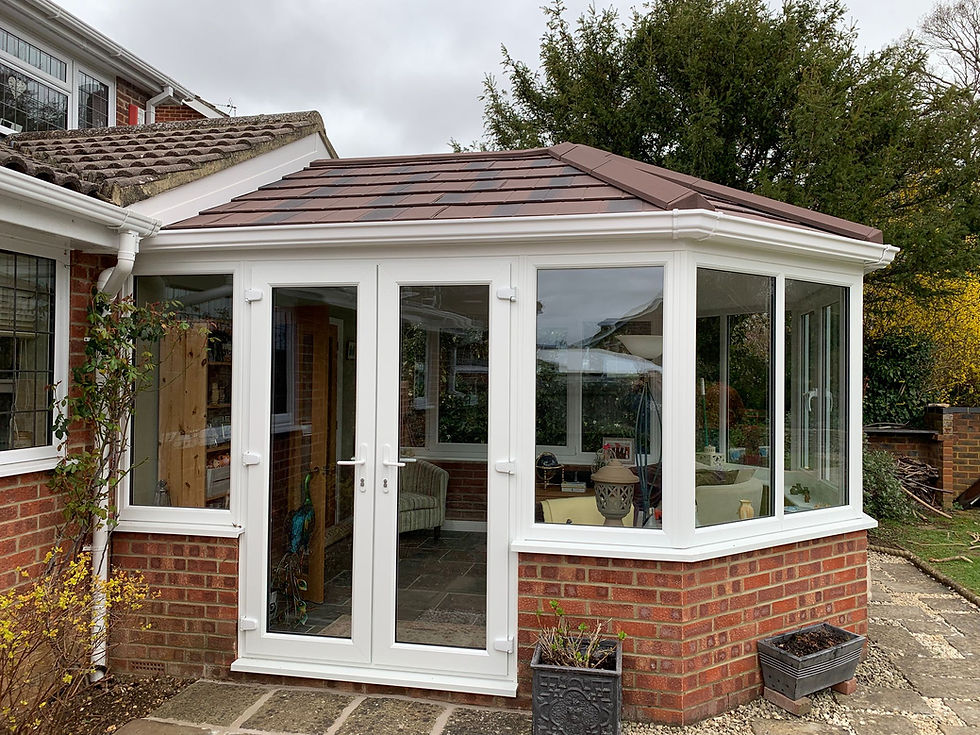
How to extend the life of a conservatory
If your conservatory is currently in reasonable shape, a few things will keep it that way:
Clean the roof twice a year. Spring and autumn. Soft brush, mild detergent, no pressure washer. Algae and debris bond to glass and polycarbonate the longer they're left.
Clear the gutters every six months. Blocked gutters are the leading cause of water ingress at the wall junction.
Check the seals annually. Sealant around roof bars, the box gutter and the wall junction is what keeps water out. Resealing every 5-10 years is normal maintenance.
Treat any moss or algae quickly. The longer it's there, the deeper into the polycarbonate flutes it gets.
Look at the brickwork. Cracks in the dwarf walls or pointing failure should be addressed before water gets in.
According to the Health and Safety Executive, working on a conservatory roof carries the same risks as any other roof. If you're not comfortable doing this yourself, get a window cleaner or a roofing contractor in.
When it's time to replace the roof (and keep the rest)
If the roof is the only thing that's failed, replacing it is almost always the better call than removing the conservatory. A warm roof replacement gives you another 25 years out of the existing frame, base and doors, and turns the room into something that performs like a proper extension.
Signs the roof has reached the end:
Yellowing or cloudy polycarbonate that won't come clean
Algae growing inside polycarbonate flutes
Condensation forming between double-glazed panes
Visible cracks in glass or polycarbonate
Leaks at the wall junction or around roof bars
The room being unusable for most of the year
We do this work for homeowners across Berkshire, including conservatory roof replacement in Bracknell and Wokingham. Most jobs take 3-5 days, the structure stays put, and the room is usable again immediately.
When it's time to remove the conservatory entirely
Sometimes the structure has had its day. If the frame is twisted, the dwarf walls are cracking, or the conservatory was built badly in the first place, no amount of roof work will save it.
Reasons removal makes more sense than a new roof:
The frame is leaning, warped or coming away from the wall
The base has settled and cracked
The conservatory blocks light into the main house
The homeowner wants the garden space back
A full house extension is planned for the same footprint
In those cases, a clean removal is usually quicker and cheaper than people expect. We did a conservatory removal in Newbury recently for a homeowner whose 1990s conservatory had reached the end of its life - the patio underneath was perfectly sound and they got their garden back inside two days.
So, how long should you expect yours to last?
Around 25 years for a decent build, with the roof needing replacement once or twice in that time. Replace the roof with a warm roof system and you reset the clock - the room can comfortably do another 25 years and perform better than it did when new. Let the roof go and the rest of the conservatory ages faster.
The cheapest mistake is treating the roof as a permanent fixture. The whole point of a roof replacement is that you don't have to lose the conservatory just because the roof's given up.
Talk to us about your conservatory
We're a family-run firm based in Reading covering Berkshire and the bordering areas. Whether your conservatory needs a new roof, a clean removal, or just an honest opinion on how much life it has left, we'll come out and tell you straight.


Comments