

Are Conservatories Old Fashioned, or Just Stuck in the 1990s?

Updated: 4 days ago
Mention a conservatory at a dinner party and someone will pull a face. The white uPVC, the green roof, the chairs nobody sits on. Fair enough - a lot of them look exactly like that.
But the conservatory itself isn't the problem. It's usually two or three specific things that haven't aged well. Sort those, and the room comes back to life. Here's the honest version from people who replace and remove them every week.
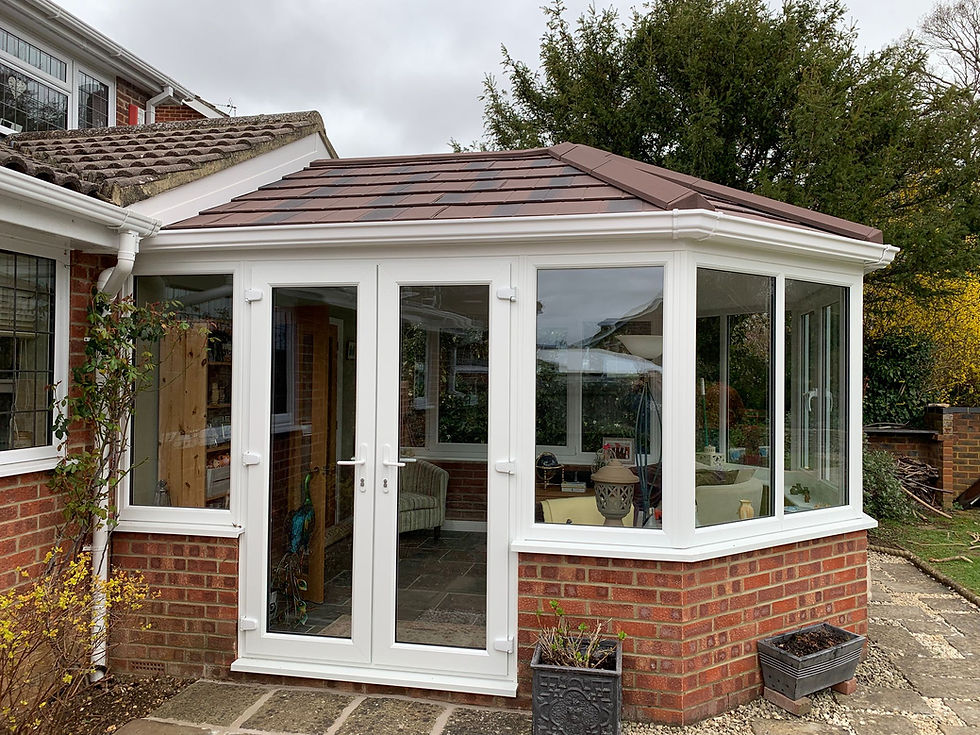
Are conservatories old fashioned?
Conservatories aren't old fashioned as a concept, but most of them look dated because of the materials they were built with. Yellowed polycarbonate roofs, white uPVC frames and outdated furniture date the room far more than the structure itself. Update those and the room feels modern. Take them down badly and you make it worse.
Why conservatories got a bad reputation
The boom years were the late 1990s and early 2000s. Door-to-door salesmen, finance deals, off-the-shelf designs in a handful of styles. A lot of the conservatories that went up then were the cheapest version of the cheapest design. White uPVC frames, lean-to or Victorian shapes, twin-wall polycarbonate roofs, no insulation in the floor or dwarf walls.
The result was a room that worked for about five months of the year. Too hot in summer, too cold in winter, deafening when it rained. Tens of thousands of these are still standing across Reading and the rest of Berkshire, and most of them still look like they were fitted in 1998. That's where the "old fashioned" label comes from.
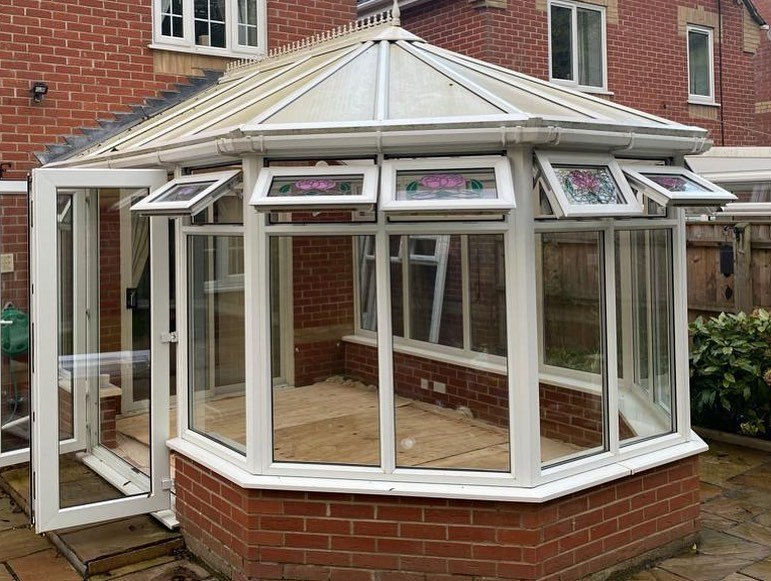
What dates a conservatory the most?
When we walk into a tired conservatory, these are the things that age it instantly:
A polycarbonate roof. Yellowing, algae inside the flutes, and a drum-kit sound when it rains. This is the single biggest giveaway.
White uPVC frames in a glossy, builder-grade finish.
Decorative cresting and finials along the ridge - the curly trim that was standard in the 90s.
Pleated blinds in cream or peach, stretched across every panel.
Wicker or rattan furniture that hasn't been replaced in 20 years.
A tiled floor that doesn't match anything else in the house.
Visible roof bars in a contrasting colour, often gold or beige.
A clear plastic door between the conservatory and the rest of the house, signalling it's a separate, occasionally-used room.
None of these need to be a permanent feature. Most can be fixed without rebuilding anything.
How to modernise an old conservatory
The cheapest fixes are cosmetic. The biggest gains come from the roof. Here's the rough order we'd tackle them in:
Replace the roof
A warm roof system is the single change that makes the biggest difference. Insulated panels, lightweight tile finish outside, plastered ceiling inside. The room then performs like a proper extension, holds its temperature in winter, doesn't bake in summer, and looks like part of the house rather than an add-on.
We replace conservatory roofs across Berkshire and it's the most common job we get called out for.
Update or replace the frames
If the frames are sound, you can paint them. Specialist uPVC paints (Ronseal and Rust-Oleum both do them) come in modern shades - anthracite grey and black are the most popular - and a good prep job lasts well. If the frames are tired, swapping them for new aluminium or coloured uPVC is a bigger spend but transforms the look.
Upgrade the glazing
Older conservatories often have single-pane or low-grade double glazing. Modern A-rated units with solar control glass cut heat in summer, heat loss in winter, and dampen rain noise. Worth doing alongside a roof replacement, less effective on its own.
Swap the doors
The flimsy uPVC door between the conservatory and the main house is one of the strongest dating signals in any conservatory. Removing it and opening the room up into the kitchen or living space makes it feel like part of the house instead of a bolt-on. Bifold or French doors out to the garden have the same effect on the outside wall.
Refresh the inside
Last on the list because it's the easiest. New flooring (large-format tiles or engineered wood), modern furniture, soft sheer blinds instead of pleated ones, and a clear use for the room. A homeowner near Maidenhead who'd been using their conservatory as a dumping ground turned theirs into a working office after a roof replacement, and now uses it every day. We do this in the same neighbourhoods we cover for conservatory roof replacement in Maidenhead and nearby.

When modernising isn't enough
Sometimes the conservatory is too far gone or doesn't suit the property anymore. The frame is twisted, the base is cracked, or it blocks light into the rest of the house. In those cases, taking it down is usually the better call.
We do a lot of removal work alongside our roof replacements, and we'll tell you straight which one your conservatory needs. We've done conservatory removals in Slough for homeowners who were planning to spend on a new roof, decided after we'd surveyed that removal made more sense, and ended up putting in a patio and bifold doors instead.
Reasons removal makes more sense than modernising:
The frame or base is in poor structural condition.
The conservatory blocks light into the kitchen or living room behind it.
The homeowner wants the garden space back.
A full extension is planned for the same footprint.
The room has never really worked for how the house is laid out.
According to the Royal Institution of Chartered Surveyors, poorly maintained conservatories can drag down a property's perceived value, while well-finished extra living space adds to it. The decision is less about the conservatory and more about what you actually want from the back of your house.
So, are conservatories old fashioned?
The structure isn't. The roof and frames on a 25-year-old conservatory are. Replace the roof with a warm roof system, sort the frames and the glazing, and the room sits comfortably alongside any modern home. If the conservatory doesn't suit the property anymore, removal is a quicker and tidier job than most people expect, and often improves the look of the house.
The mistake homeowners make is treating the whole conservatory as the problem when usually it's two or three specific bits. Sort the bits, save the structure - or sort the lot and start fresh.
Talk to us about your conservatory
We're a family-run firm based in Reading covering Berkshire and the bordering areas. Whether you're after a conservatory roof replacement in Basingstoke, removal, or just an honest opinion on whether your conservatory is worth saving, we'll come out and tell you straight.


Comments